How Many Projects Can You Manage at Once? The Real Limit, Backed by Research
More than 80% of people juggle multiple projects at once, but research shows the sustainable ceiling is lower than most founders think. Here's the real number and how to know when you've crossed it.
You are running six client projects, three internal initiatives, and a side product that was supposed to be "a weekend thing." Every morning you rotate through Slack, Teams, email, and three different dashboards trying to remember where each of them stands. Sound familiar? If you manage multiple projects at once — and almost everyone does — you have probably wondered how many is too many before the whole stack starts to wobble.
Here is the uncomfortable truth: there is a data-backed answer to how many projects you can manage at once, and most founders, operators, and team leads are already sitting well above it. Researchers who studied thousands of employees found that juggling more than five simultaneous projects measurably hurts your ability to hit deadlines — yet the same studies show more than a quarter of people routinely carry six or more. The gap between what our brains can hold and what our calendars demand is not a personal failing. It is a structural problem with a fix.
Let's look at the actual numbers, what research says about your real capacity, and how to know when you have crossed the line — and what to do about it.
The real numbers: most people are already past their limit
Working across several projects is the norm. According to research cited by The Conversation, more than 80% of employees juggle multiple projects at once. That alone is not the problem — it has become the default way we work.
The problem is how many. A large-scale study at a global manufacturer with around 20,000 employees tracked project loads, performance indicators, and time allocation across hundreds of people over several years. The finding is strikingly consistent: employees working on between two and five projects performed well, while those stretched beyond five began to miss deadlines and lose focus.
Yet the distribution of real workloads tells a different story than the research suggests is healthy:
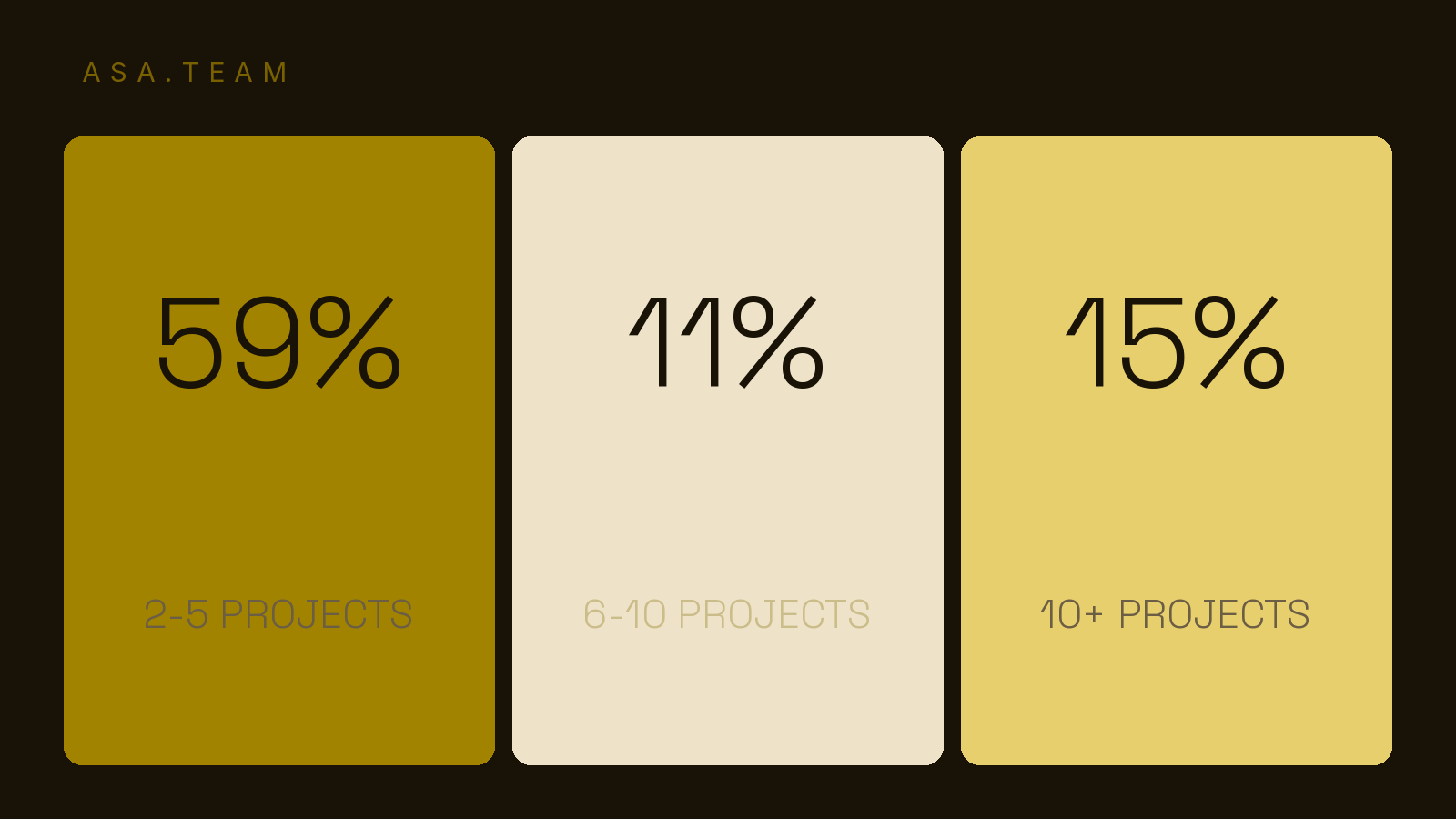
| Projects handled at once | Share of employees | Research verdict |
|---|---|---|
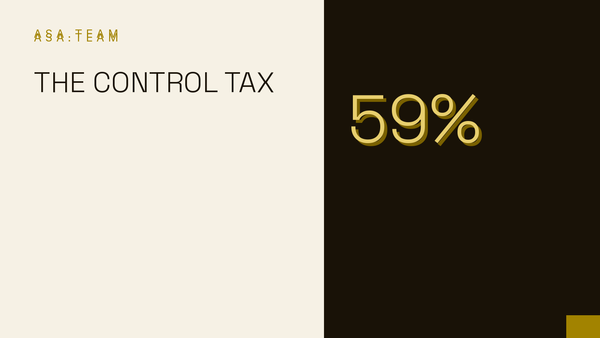
| 2–5 | 59% | Healthy range — strong focus, on-time delivery |
| 6–10 | 11% | Stretched — rising missed deadlines, scattered attention |
| 10+ | 15% | Overloaded — attention residue, elevated burnout risk |
Add those last two rows together and you find that roughly 26% of employees are working beyond the range the research identifies as sustainable. And that 15% figure is not a rounding error — it is a substantial share of the workforce running the equivalent of a mid-sized portfolio on their own shoulders.
More than five simultaneous projects is where focus starts to break down — but less than five can leave people under-utilised. The research consistently lands on a narrow sweet spot, not an open-ended "the more the better."
Why five keeps showing up as the ceiling
The reason the number five keeps appearing is not arbitrary. It traces back to how attention actually works. When you shift between projects, your brain does not instantly drop the previous task. Researchers call the lingering residue attention residue — the part of you that is still mentally inside the last project while you try to engage with the next one.
Multiply that across five, six, or ten projects and the residue never fully clears. You are not switching between focused states; you are carrying fragments of every previous project into each new one. As the study's authors put it, employees with too many projects "might experience lack of focus and stretched brain capacity," and struggle to be present in the moment. Inc summarised the same U.K. research bluntly: your brain can't handle more than five projects at once, and even then it only has roughly four hours of deep cognitive work in it per day.
That four-hour figure matters more than most people think. If four hours is your real reservoir for cognitively demanding work, then every additional project you carry competes for a share of a fixed and shrinking pool. Add meetings, notifications, and status-chasing to the mix and the deep-work hours vanish before lunch. This is why the productivity cost of being oversubscribed compounds instead of merely adding up — every extra project taxes the same limited attention budget.
Three to four: what the operator's reality looks like
Research gives us the ideal range, but the people actually running teams offer a more grounded picture. Project-management guidance from ClickUp suggests that holding more than three to four significant projects concurrently starts to limit a person's ability to manage them effectively — a slightly tighter bar than the academic five, because it accounts for the real-world overhead of communication, coordination, and context-switching on top of the project work itself.
That overhead is substantial. In a survey of 570 project managers conducted by RebelsGuideToPM, communication ranked as the most important skill for managing multiple projects — named by 90% of respondents. The same survey found 19% of project managers openly say they are overwhelmed, and only 26% report that they genuinely thrive on the challenge of juggling several projects at once. Nearly two in three said they struggle with perfectionism, which is a quiet way of saying the workload is demanding more than feels controllable.
Here is the pattern worth noticing: the people who manage many projects successfully are not the ones with superhuman focus. They are the ones who have built systems that reduce the work about the work — the status chasing, the "where are we?" pings, the frantic search across apps for the latest update on each project. The less overhead they carry per project, the more projects they can realistically hold. That is the lever you actually control.
What good looks like: stop counting projects, start cutting overhead
The instinct is to answer "how many projects can you manage?" with a number and then police yourself against it. A better approach is to accept that your attention budget is fixed and focus instead on shrinking the context-switching tax that every additional project imposes.
Teams that handle multiple projects without falling apart tend to do a few things deliberately. They keep a single source of truth for each project's status so nobody has to ask where things stand. They batch the communication, replacing scattered check-ins with structured async updates. And they ruthlessly cut the tools that duplicate each other, because each extra platform is another place a status update can go to die — a problem we've written about before in the real cost of tool sprawl. The goal is to make each project's state visible without making the owner do extra work to report it.
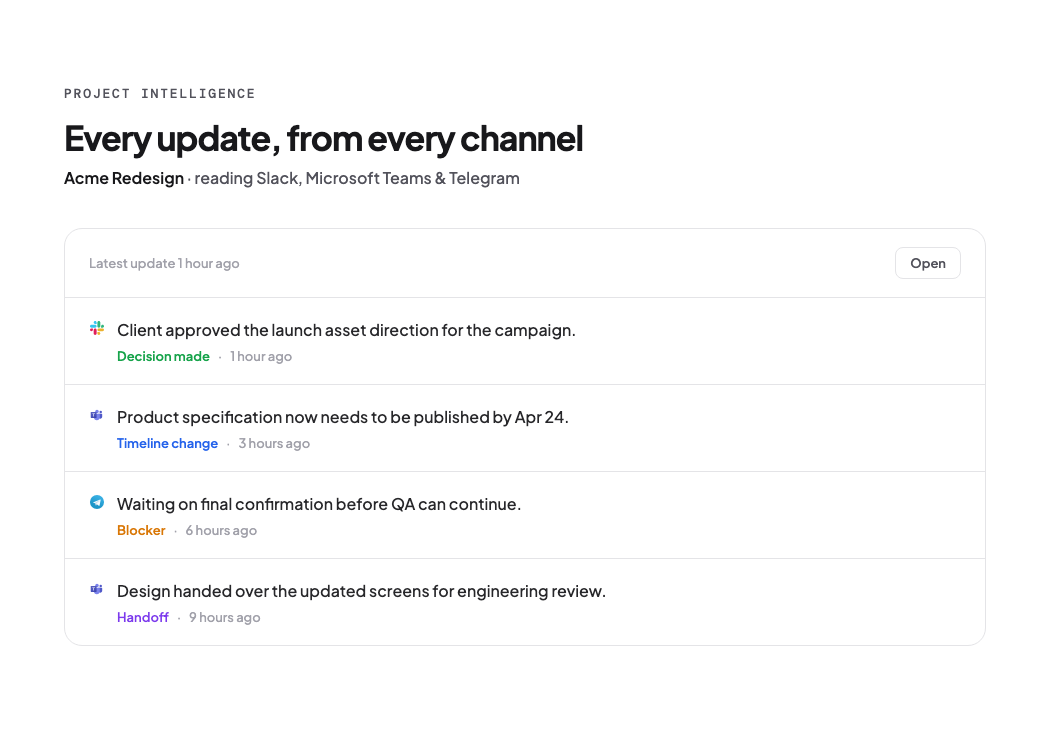
This is exactly where a tool like Project Intelligence comes in. Instead of asking you to keep mental tabs on where every project stands across Slack, Teams, Telegram, and WhatsApp, it surfaces the updates automatically — pulling the latest activity from each platform into one place so you don't have to chase the thread project by project. The fewer places you have to look to know what's happening, the more projects your attention budget can actually cover. It is the difference between managing five projects and frantically trying to track ten.
Under the pressure of several clients, solo founders and micro-teams often discover that the bottleneck is not skill or ambition but sheer cognitive load — the same load we explored in why a solo founder's week feels broken. When every project demands mental reopening every morning, the week collapses under its own weight.
How to know when you've crossed the line
You do not need a spreadsheet to spot the moment you are oversubscribed. Real-world signals are reliable early warnings: you are constantly feeling behind, you struggle to prioritise because everything feels urgent, deadlines are slipping for reasons that are not really about the work itself, and you end most days having made shallow progress on many things and deep progress on nothing.
When those signs appear, the fix is rarely "try harder." It is structural. Reduce the number of simultaneous projects where you can. Batch similar work — the research found that familiar, similar projects are cheaper to hold than unrelated ones because you can reuse context instead of rebuilding it. And invest in systems that make each project's status visible without you having to reconstruct it from memory. If you cannot drop projects, then cut the coordination cost of the ones you have.
Frequently asked questions
Is there a single magic number of projects to manage at once? Research generally lands on five as the ceiling for well-performing simultaneous projects, with practical guidance suggesting three to four significant projects is a safer real-world target once coordination overhead is factored in.
Can some people handle more than five projects effectively? Yes, but not by sheer willpower. People who handle more succeed by cutting per-project overhead — reusing context across similar projects, working with familiar teammates, and automating status reporting so they spend less time on the "work about the work."
Does working on fewer projects make you less productive? Surprisingly, yes. The research found that working on too few projects leaves time idle waiting on others — the sweet spot is not "as few as possible" but a deliberate balance where you have enough active work to stay engaged without tipping into overload.
How do I reduce the cost of juggling several projects? Consolidate the platforms and tools you use so status updates stop scattering, batch and structure communication into async updates rather than endless check-ins, and centralise each project's current state so you are not reconstructing it from memory every single morning.
There will never be a perfect answer to "how many projects can you manage at once," because the honest number depends on how much overhead each project drags behind it. But the research is clear on direction: your attention is a fixed budget, five is the realistic ceiling, and the projects you can hold comfortably grow the more you cut the cost of tracking them. Before you take on one more client or initiative, ask yourself a harder question than "can I fit it in?" — ask what you would have to stop chasing to make room for it.