How Much Time Do Employees Spend on Training? The Real Numbers
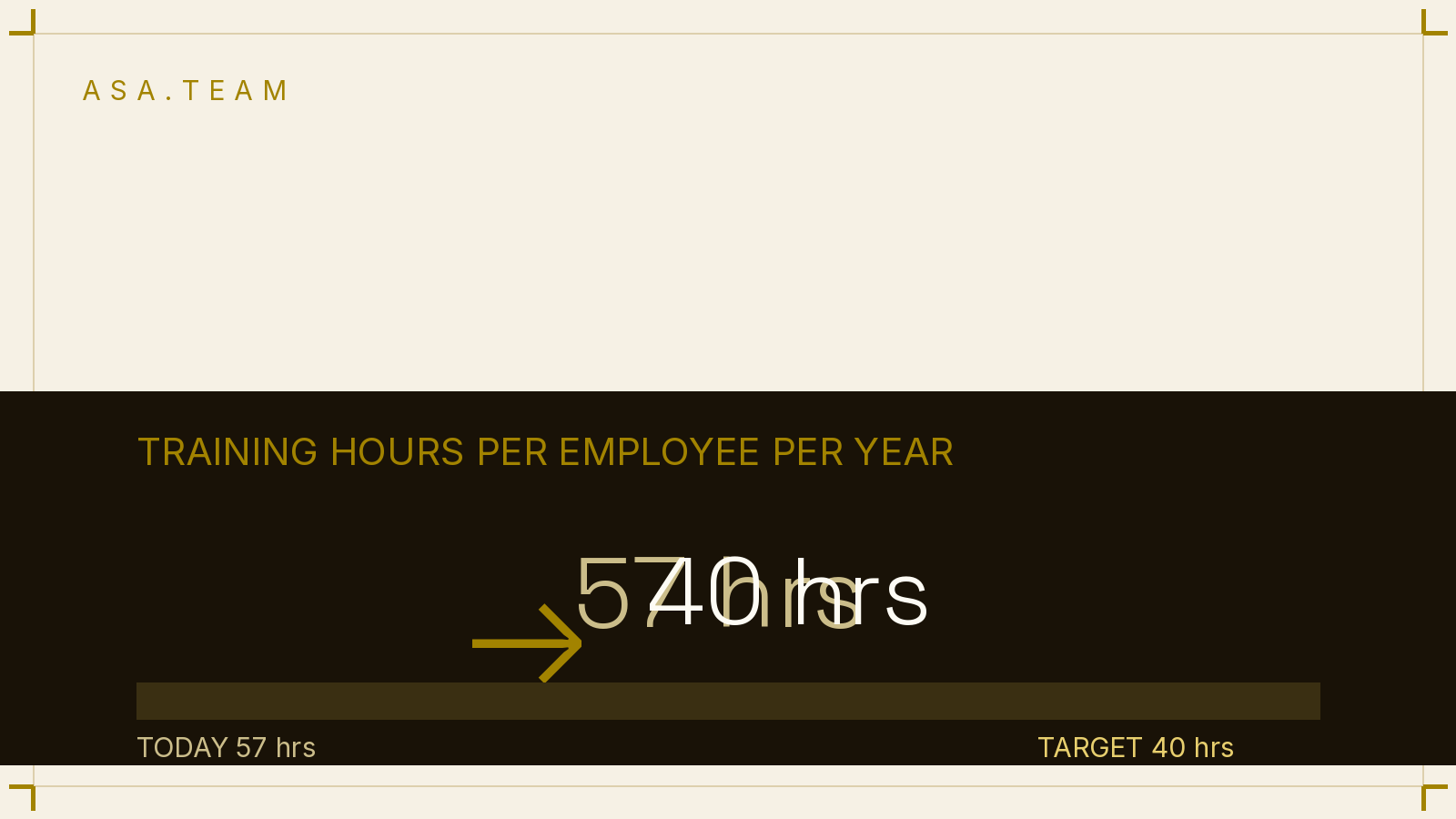
How much time do employees spend on training? The ATD benchmark is 40 hours per employee per year — roughly one hour a week — and it has fallen for two straight years. Here's the real data and the barrier behind the decline.
How much time do employees spend on training? If you ask the people who own the learning budget, you get a deck: an AI-skills rollout, a new leadership curriculum, a fresh license for a learning platform, all of it urgent. If you ask the employee whose calendar those programs are supposed to land on, you get a different answer. Their week is already spoken for — client work, internal updates, a stack of threads to catch up on after every meeting they left.
Both answers are true, and that tension is the whole story about workplace learning right now. The honest average is smaller than the strategy decks suggest, and it is getting smaller while the case for learning gets louder. The average American employee receives roughly 40 hours of training a year — about one hour a week — and the number has now dropped for two consecutive years. The bottleneck is not budget. It is the cost of stepping away from the actual job, and until leaders treat that cost as the real constraint, training will keep losing the calendar battle.
The Real Benchmark: 40 Hours a Year, Not One Hour a Week
The most-cited number in corporate learning comes from ATD's State of the Industry research, published each year through Training Industry. The 2025 edition found that employees received an average of 40 hours of training per year, down from 47 hours the year before. Services organizations led the way at 51 hours on average, and large services companies topped the chart at 62 — but those are the ceiling, not the floor.
Put 40 hours in context. A full-time employee works roughly 1,800 hours a year. Training claims a bit over 2% of that time — one hour in a 40-hour week, and that is the mean, pulled upward by the employees who get a lot.
The direction of travel matters more than the level. Training Industry's 2024 compilation shows the same average at 47 hours in 2024, down from 57 hours in 2023 — a roughly 30% decline in two years. Money did not fall as fast, which tells you the cost of each training hour is rising: direct learning spend was $1,254 per employee in 2024, and the average cost per learning hour used climbed about 34% year over year to $165. Organizations are buying fewer hours at higher prices.
| Year | Avg. training hours per employee | Source |
|---|---|---|
| 2023 | 57 hours | ATD / Training Industry (2024 report) |
| 2024 | 47 hours | ATD / Training Industry (2024 report) |
| 2025 | 40 hours | ATD / Training Industry (2025 report) |
Skills Are Rotating Faster Than Training Hours
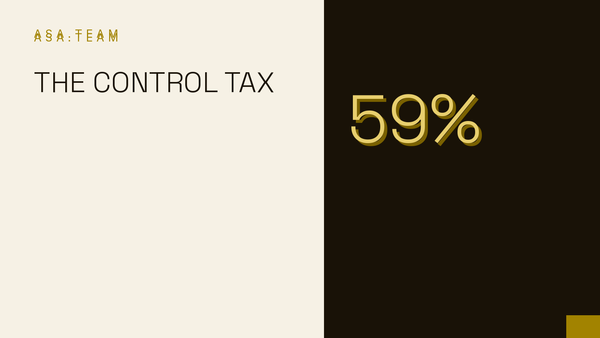
Here is the part that should bother operators. The 40-hour average is arriving at the exact moment the shelf life of job skills is shortening. Gallup's analysis of workforce development cites Lightcast data showing that 32% of the skills required for the average U.S. job changed between 2021 and 2024 — a third of what your job requires, rewritten in three years. The World Economic Forum projects that 59% of the global workforce will need to upskill by 2030.
Participation is thin too. In 2024, only 45% of U.S. employees participated in any training or education to build skills for their current job, according to the same Gallup research. Because the 40-hour figure is an average, a number that low of participation means the median employee's training time is effectively zero. Development is not being spread evenly — it is concentrating in the people who were already getting it.
Manager training is the sharpest gap. Gallup finds that less than half of managers worldwide have received any formal management training — the people who, per Gallup's research, account for about 70% of the variance in team-level engagement. The upside is documented: managers trained in coaching and people development see up to 18% higher engagement on their teams and a 20% to 28% lift on other performance measures. The training that would most change team performance is the training least often purchased.
The Real Bottleneck Is "Time Away From the Job"
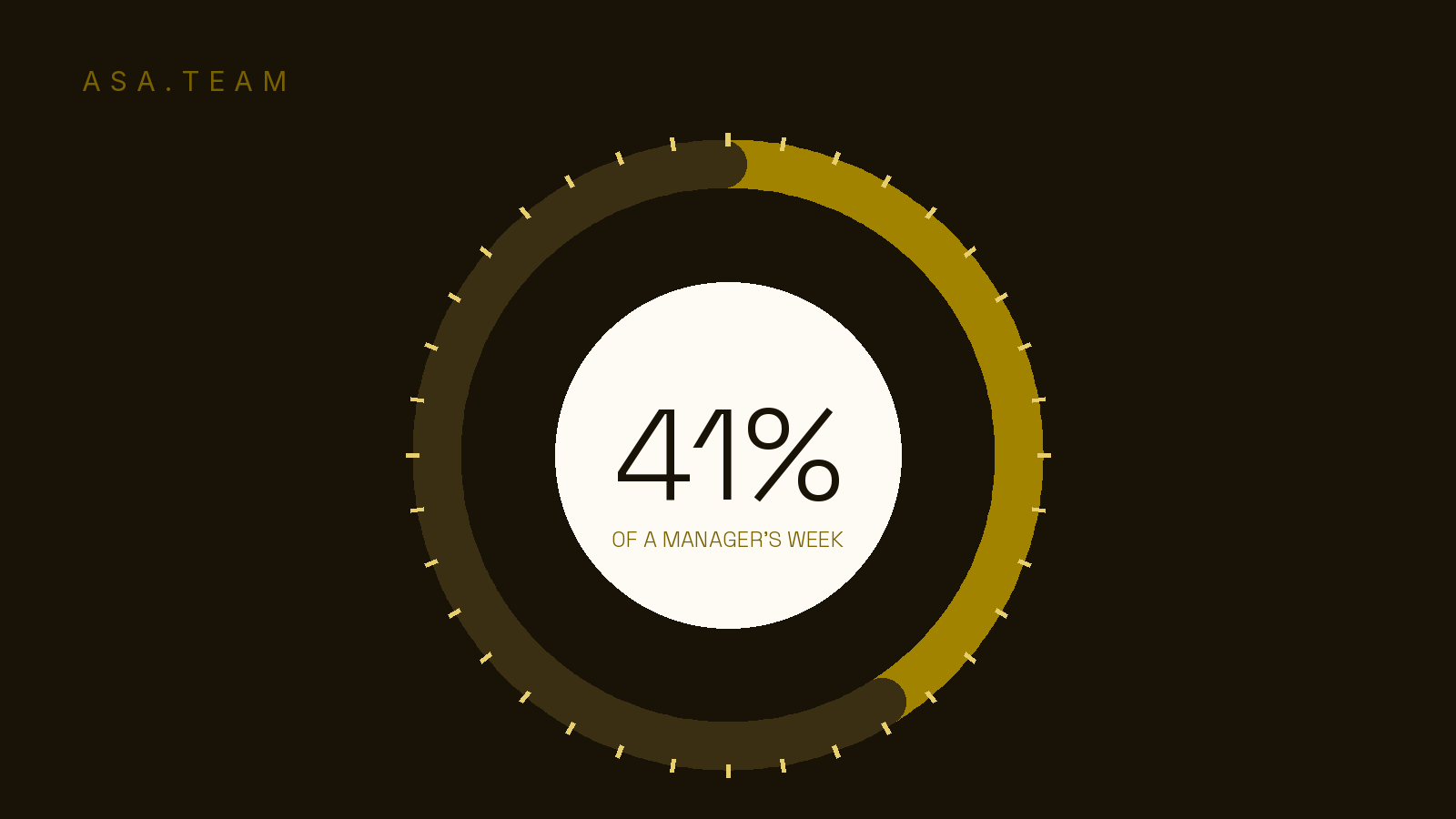
If budgets exist and the skills case is loud, why do the hours keep falling? Gallup asked employees, managers and CHROs the same question about barriers to development, and got an unusual answer: everyone agreed. 89% of CHROs name time away from job responsibilities as their organization's biggest obstacle to employee development. Forty-one percent of employees say it is their own top obstacle; 37% of leaders and managers agree.
Employees, managers and chief HR officers all rank the same barrier first: not budget, not motivation — time away from the day job. Training hours don't disappear because the course is bad. They disappear because the work never stopped while you were in it.
Look at how the hours are actually delivered and you can see why the calendar fights back. In ATD's 2025 data, 34% of training hours were delivered online or via computer-based technologies and 28% in a classroom with an instructor. Mobile delivered just 6%. The modal training experience is still a blocked-out chunk of the day — either in a virtual room or a physical one.
And the cost of that chunk is bigger than its length. Stepping away for two hours of compliance training means returning to a project that moved without you: decisions taken in the channel, a status that changed overnight, a client question parked in someone's inbox. Employees who are bad at reconstructing that context don't just lose time — they avoid the step-away entirely. If you want to know where the rest of the day goes instead, the same logic drives our breakdown of how much time employees spend on administrative tasks and how many hours a day employees actually work. The gap between "at work" and "on the work" is exactly where training gets squeezed out.
What Good Looks Like: Training That Survives the Workday
The business case for fixing this is not soft. Gallup's meta-analysis projects that organizations could see an 18% increase in profit and 14% increase in productivity by doubling the share of employees who feel they have opportunities to learn and grow at work. Companies are cutting the one input that pays that well.
The teams that keep their training hours do a few boring things deliberately:
- They schedule learning like a client deadline. A standing block per week, protected the way customer commitments are protected — not a module due "by end of quarter."
- They spend the hours on changing skills, not compliance theater. The modal completed training is still role-specific and compliance content; the skills that move outcomes are leadership and technical ones.
- They make the manager the multiplier. Since trained managers deliver measurably more engaged teams, manager development comes first, not last.
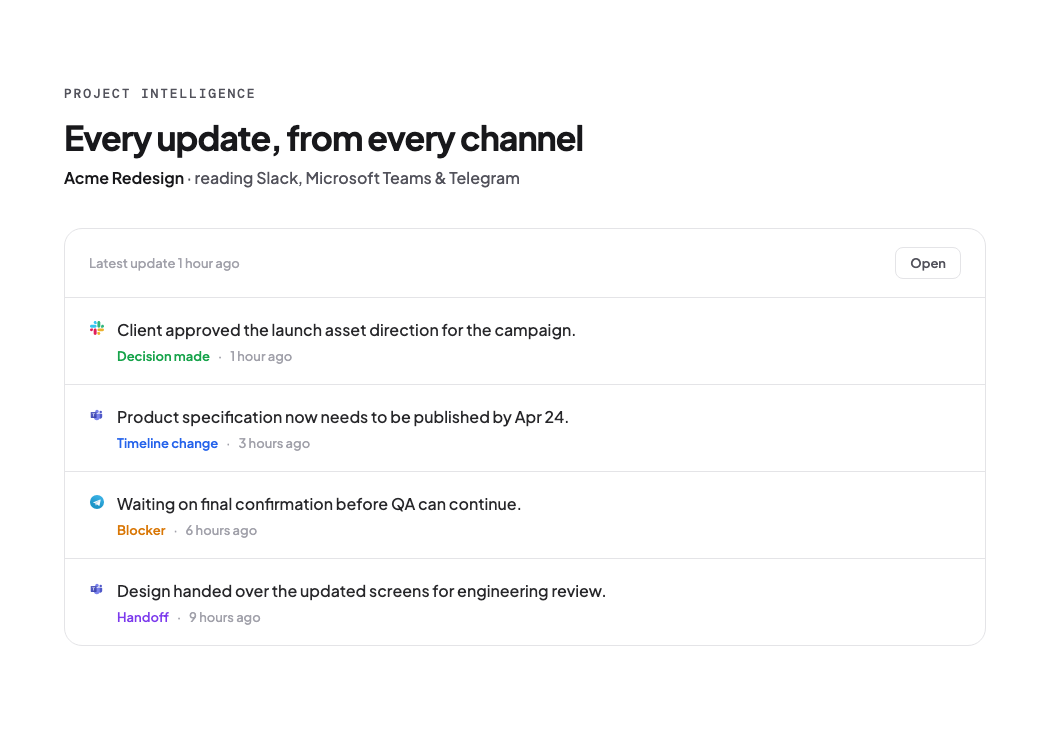
And they shrink the cost of stepping away. That last point is where the tooling conversation finally matters. Much of what makes "time away from the job" expensive is that project context is scattered across the tools the team actually works in — a decision in Slack, a blocker raised in Teams, a client update dropped in a WhatsApp group. When someone returns from two hours of training, reassembling that state can take longer than the training did. This is the problem Project Intelligence by Asa.Team is built to remove: it reads updates flowing through Slack, Microsoft Teams, Telegram and WhatsApp and surfaces a current view of each project, so stepping away stops costing twice. A team that can trust the project's state to be summarized on return protects its learning hours without adding another meeting.
Frequently Asked Questions
How many hours of training per year does the average employee get? The 2025 ATD / Training Industry benchmark is 40 hours per employee per year — roughly one hour per working week — down from 47 hours in 2024 and 57 in 2023.
How much do companies spend on training per employee? Direct learning spend averaged $1,254 per employee in 2024, with the average cost per learning hour used rising to $165. Large companies spent an average of $11.7 million on training in 2025, midsize companies about $1.6 million.
Does training time vary by company type? Yes. Services organizations led all business types at 51 average hours in 2025, and large services organizations reached 62 hours — well above the 40-hour all-industry average.
Why are training hours declining? The same barrier tops every list Gallup surveyed: time away from job responsibilities (89% of CHROs, 41% of employees). With unit costs up 34% year over year, flat budgets buy fewer blocked-out hours, and the hours get cut exactly where work pressure is highest.
The Hour Nobody Blocks
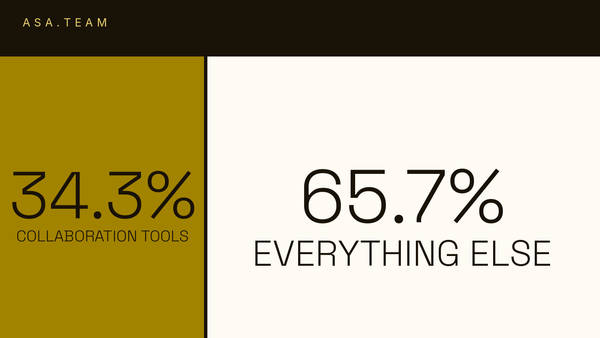
The number, then: 40 hours a year, about one hour a week, falling for two straight years while the half-life of skills falls with it. Most of that decline is not a strategy — it is a thousand small calendar defeats, each one rational, all of them adding up to employees who spend a third of their working lives on tasks that aren't quite their job and less than one hour a week on getting better at it.
So here is the question worth checking before your next planning cycle: when did someone on your team last complete a training block — and what happened on their projects while they were gone? If the honest answer is that nobody can reconstruct what they missed without asking five people in three apps, your training budget is competing with a tax you've never measured. Cut that tax first. The hours defend themselves after that.