The status update nobody gives


Why the most accurate project update is always in Slack — and never in your tracker.
The status update nobody gives
Here's something most people who manage projects notice eventually: the most accurate picture of any project isn't in the tracker. It's in the 3pm Slack thread where someone said "heads up, the API integration is going to slip by a day" and two people replied with a thumbs up, and that was it.
Nobody updated the ticket. Nobody moved the card. The information existed — it just lived somewhere else.
This is so normal it barely registers as a problem. But it's worth naming: projects produce two streams of information. The official stream — tickets, status updates, project plans — is curated and slow. The real stream — Slack, Teams, WhatsApp, group chats — is fast, messy, and almost never synced back.
The things that never make it into the tracker

Quick blockers that resolve in a day. Soft deadline changes that "everyone already knows about." Context from a client call that didn't make it into a comment. Decisions made in a thread at 11am. Scope creep that happened organically over three conversations.
The unwritten rule of most teams: if it's important enough, it'll get documented eventually. Eventually is doing a lot of work in that sentence. A lot of signal decays before it reaches a ticket.
Why status meetings still exist
The reason we still have status meetings — despite every project tool promising to make them unnecessary — is this gap. The sync call is the mechanism teams invented to surface the real information stream into something structured.
It works, kind of. But it's expensive. A 30-minute weekly with eight people is four hours of collective time. And the best updates in that meeting are the ones that should've been asynchronous anyway: the integration is done, we're blocked on X, the deadline moved to Thursday.
That async version already happened. In Slack. Three days ago. Nobody had a system for reading it.
The question worth asking

If the information already exists in conversation, the question isn't "how do we get people to document things better" — that's been tried, extensively, and it doesn't stick. The question is: what would it look like to read the conversation instead?
Not to replace the tracker. It still serves its function as structured source of truth. But conversations are already happening. They contain updates, blockers, decisions, and deadlines — they're just not indexed in a way that answers "where is this project actually at?"
The approach that makes the most sense: connect the places where real work happens (Slack, Teams, Telegram, WhatsApp) to your projects, let conversations flow naturally, and surface structured signals from what's already being said. No new process. No status update rituals. The team just works.
When someone asks what's the status on the redesign project, the answer should come from the last week of actual conversation — not from what someone remembered to update on Friday afternoon.
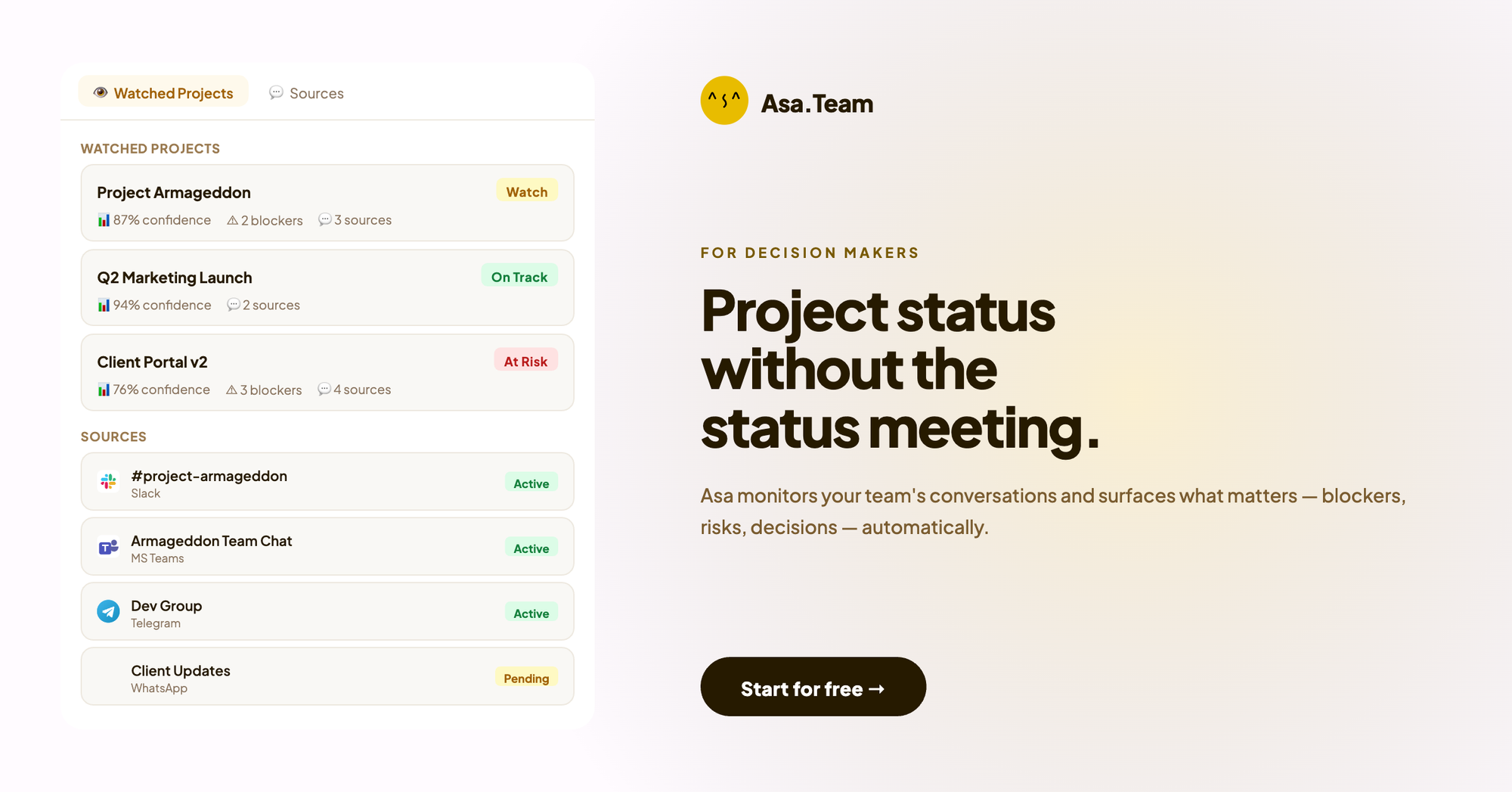
We've been building toward this at Asa.Team. Project Intelligence connects your team's conversations to your projects and keeps you informed without adding process. Take a look →