Priority Inflation: When Everything Is Urgent, Nothing Gets Done
When every task is high priority, none of them are. Here's how priority inflation spreads through teams — and the structural fix that actually works.

7 min read
It usually starts with a standup. "What's blocking you?" someone asks. Everyone looks at their board. Three things are marked P1. Two were added yesterday. One's been P1 for six weeks.
Nobody says anything. The team moves on.
This is priority inflation — and if it's happening in your standups, it's almost certainly happening everywhere else too: your backlog, your sprint goals, your roadmap. It's the invisible force that makes your team feel perpetually behind without anyone being able to point to why.
This post breaks down what priority inflation actually is, why it spreads so fast, what it silently costs your team, and — crucially — the structural changes that fix it without blowing up relationships.
- What priority inflation actually is
- Why teams do it: the conflict avoidance engine
- The stakeholder pressure loop
- What priority inflation silently costs you
- How high-performing teams triage instead
- Diagnostic: is your team infected?
- How to fix it without blowing up relationships
What priority inflation actually is
Priority inflation is what happens when the "high priority" designation loses its meaning because it's applied to too many things. It's the organizational equivalent of crying wolf: when everything screams for attention, the signal disappears.
In a healthy system, "P1" means one thing: stop everything else and address this. In an inflated system, P1 means "someone cared enough to click the dropdown." The result is that your team's attention gets distributed across a dozen equally-labeled urgent items, and genuinely critical work competes with everything else for focus.
Priority inflation isn't the same as having too much work. Teams with healthy workloads can have inflation. Teams with genuinely crushing backlogs can still maintain meaningful triage. The difference is structural: it comes down to whether your team has clear, enforced criteria for what priority actually means — and whether leadership is willing to say the uncomfortable thing that always comes with real prioritization: "this is more important than that."
Why teams do it: the conflict avoidance engine
Here's the uncomfortable truth most posts about prioritization skip: priority inflation is usually deliberate, even if unconsciously so.
Marking something P1 is easy. It says "this matters" without requiring anyone to say what it matters more than. It avoids the political cost of telling a stakeholder their request is lower priority than someone else's. It sidesteps the awkward sprint planning conversation where you have to cut something.
It's conflict avoidance wearing the costume of urgency.
This is why priority inflation tends to concentrate in teams with unclear decision authority. When no single person owns prioritization — or when the person who does lacks the organizational standing to make calls stick — the path of least resistance is to agree that everything is important. The consequence lands later, usually as a missed deadline or a sprint that ships half of what it planned.
It's closely related to decision debt — the accumulated cost of choices nobody documented and reasoning nobody captured. As explored in this post on decision debt, undocumented trade-offs don't disappear; they resurface as repeated arguments. Priority inflation works the same way: deferred prioritization decisions don't vanish, they pile up as an ever-expanding list of equally "critical" work.
"When no one is empowered to say no, everyone is implicitly told yes — and the team pays for it in velocity, clarity, and trust."
The stakeholder pressure loop
Even when a team has a clear prioritization owner, external pressure creates a second driver of inflation: the stakeholder loop.
It works like this: a stakeholder submits a request and follows up asking for its priority. The PM, not wanting to trigger a difficult conversation, bumps it to "high." This works — the stakeholder stops following up. So the pattern gets reinforced. Other stakeholders notice the squeaky-wheel dynamic and start following up on their own requests. Soon, the triage system is responding to social pressure rather than impact.
This is a structural problem masquerading as a people problem — exactly the same misdiagnosis that makes scope creep so persistent. You can't fix it by asking people to "be more realistic" about priorities. You fix it by making the criteria for prioritization transparent and non-negotiable, so the framework absorbs the pressure instead of the people.
What priority inflation silently costs you
Priority inflation is hard to measure, which is part of why it persists. But its costs are real and they compound.
Focus time collapses
When everything is urgent, engineers and PMs context-switch constantly to respond to the latest P1 — regardless of what they were in the middle of. According to Worklytics' 2025 Productivity Benchmarks, the median knowledge worker has just 3.2 hours of genuine focus time per day. Priority inflation eats directly into that window — each "urgent" context switch carries a recovery cost that adds up fast across a sprint.
Confidence in estimates erodes
When priority can change on a Tuesday afternoon, long-range planning becomes meaningless. Engineers stop committing to estimates because they've learned the sprint will be reshuffled before it ends. This isn't a team discipline problem — it's a rational response to an unstable priority environment.
Burnout accelerates
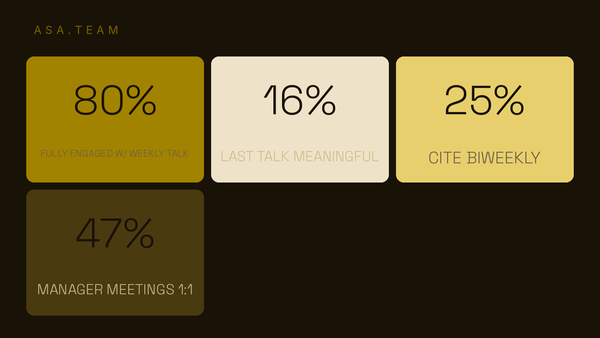
Sustained urgency without visible progress is a burnout accelerant. Asana's Anatomy of Work research, which surveyed over 10,000 knowledge workers globally, found that 88% of workers agree that time-sensitive projects have fallen behind or through the cracks due to task volume — and 80% report feeling close to burnout. Priority inflation keeps people in a constant state of high alert for work that rarely fully resolves.
Real priorities get missed
The most insidious cost: genuinely urgent work gets lost in the noise. When a P1 label means the same thing as a P2 label, the thing that would have actually moved the needle competes with twelve other equally-labeled items for attention. Cross-team dependencies — already prone to invisibility — become almost unmanageable when every team's own list is equally "critical."
How high-performing teams triage instead
Teams that maintain meaningful prioritization share a few structural habits. They're easy to describe but take discipline to implement consistently.
| Inflation-prone approach | High-performing approach |
|---|---|
| Priority is set by whoever asked most recently | Priority is set by a framework with defined criteria |
| Everything above a threshold gets P1 | P1 is capped — it's a count, not just a category |
| Trade-offs are implicit and avoided | Trade-offs are explicit and documented |
| Stakeholders escalate to reset priority | Escalation path exists but criteria are public |
| Priority changes happen in Slack DMs | Priority changes are logged with a one-line rationale |
The RICE model as a starting point
RICE (Reach, Impact, Confidence, Effort) is the most practical scoring framework for preventing inflation. It forces you to attach numbers to the factors that make a feature valuable — which means priority becomes a calculated output, not a negotiated label. The uncomfortable conversation shifts from "is this high priority?" to "what's your reach estimate and how did you get there?" That's a much easier conversation to have, and a much harder one to game.
Priority as a count, not just a category
One of the simplest structural fixes: decide in advance how many P1 items can exist simultaneously. Some teams cap it at three. Some cap it at one per engineer. The specific number matters less than the constraint — because the constraint forces the genuine trade-off decision that inflation is designed to avoid. When adding a new P1 requires demoting an existing one, suddenly everyone is very motivated to be accurate about what's actually critical.
Diagnostic: is your team infected?
Run through these questions for your current sprint or backlog. If you answer "yes" to three or more, priority inflation is already shaping how your team works.
- Do more than 30% of your open tickets carry the same top priority label?
- Has your "high priority" count grown in the last two sprints without shipping a corresponding number of completions?
- Do engineers regularly ask "what should I work on first?" even though every item is marked urgent?
- Are you adding new tickets to the top of the stack more often than you're closing them?
- Have you ever bumped a ticket's priority to stop a stakeholder from following up, rather than because the work genuinely became more critical?
- Would different people on your team give different answers if asked "what's the single most important thing we're working on right now?"
How to fix it without blowing up relationships
The fix for priority inflation has three components, and you need all three — because the inflation lives simultaneously in your tooling, your process, and your culture.
1. Reset the definition publicly
Call a short team meeting and set explicit criteria for each priority level. What does P1 actually mean? What's the response expectation for a P1 ticket? What happens to P2s when a P1 exists? Write it down, post it where your tickets live, and get sign-off from whoever owns the team's direction. The definition only works if it's shared — otherwise it becomes one person's interpretation against another's.
2. Audit and regrade the current backlog
Run a dedicated triage session for the sole purpose of fixing existing labels — not planning the sprint, just reconciling priority. Apply the new criteria to every open item. Some things will drop from P1 to P2. That's a good sign, not a sign of failure. The goal is to make the top of the queue trustworthy again so the team can actually rely on what's there.
3. Create a visible trade-off log
Every time priority changes, capture why — even one sentence. "Moved from P2 to P1 because of the enterprise deal deadline." This does two things: it slows down casual upgrades (because people have to justify them in writing), and it creates an audit trail that stakeholders can reference. You don't need a separate system for this — a comment field in your existing tracker is enough. The discipline is the point, not the tooling.
This isn't bureaucracy for its own sake. It's the same principle behind keeping a decision log: the reasoning that felt obvious this week will be opaque in three months, and the team will argue about it from first principles again. One sentence prevents that loop from starting.
The shift worth making
Priority inflation is a symptom of a team that hasn't been given the tools — or the permission — to make hard calls. The fix isn't stricter enforcement of a label system. It's building a culture where saying "this is not the most important thing right now" is treated as responsible product leadership, not a judgment of the work's worth.
When your team trusts that priority reflects genuine impact, a few things quietly change: standups get shorter because there's less negotiation, planning gets faster because the trade-offs are already made, and engineers can actually commit to what they say they'll ship. That's not a minor improvement — it's the difference between a team that feels perpetually behind and one that ships calmly and consistently. Tooling can help you maintain visibility and track changes as they happen, but the discipline of real prioritization has to come first.
Frequently asked questions
What is priority inflation in project management?
Priority inflation is when too many items carry a "high priority" label, making the label meaningless. It happens when teams avoid the difficult trade-off of explicitly ranking work against each other — so everything rises to the top, and genuinely critical work gets lost in the noise.
How do you fix priority inflation on an engineering or product team?
Start with a shared, written definition of each priority level, including an explicit cap on how many P1 items can be open at once. Then run a backlog audit to regrade existing tickets against the new criteria. Going forward, require a one-sentence rationale for any priority change — the friction of justification naturally slows inflation without requiring heavy process overhead.
Why does everything feel urgent at work?
It usually comes down to two causes: unclear decision authority (nobody is empowered to say "no, this waits") and stakeholder pressure dynamics (the loudest requester gets the highest priority). Neither is solved by individual discipline alone — both require structural change to how your team makes and enforces prioritization decisions.
What's the difference between priority and urgency?
Priority reflects impact — how much value does completing this create? Urgency reflects timing — how much does delay cost? Many teams conflate them, treating "urgent" and "high priority" as synonymous. The distinction matters: a bug that affects one user may be urgent but low overall priority; a high-value feature may be top priority but tolerant of a two-week delay. Both dimensions need to be assessed separately, or urgency will always win over impact.